Road maintenance crews and the unnamed road problem
JKR receives a pothole report: "the road between Tamparuli and Kiulu, about 5km after the bridge." That can still mean multiple locations.
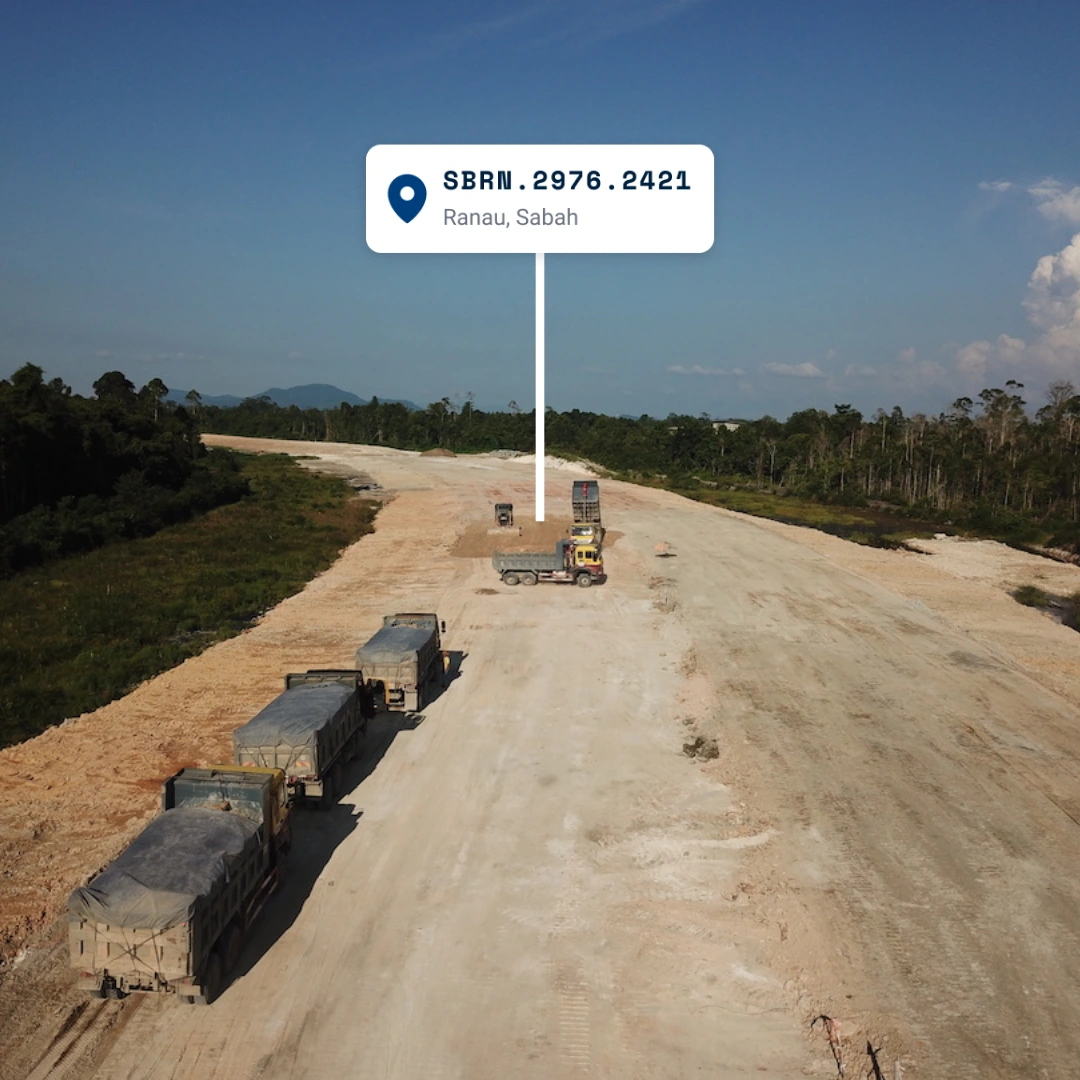
A JKR officer gets a pothole report that says "about 5km after the bridge." The crew drives out, reaches the bridge, and then has to decide which of the three side roads the caller meant. That is how small delays become full afternoons. The truck can be on site, the team can be ready, and they can still be nowhere near the actual problem because the description never became a point on the map. The officer ends up calling back, the caller starts repeating landmarks, and both sides are trying to translate memory into a route.
Malaysia has thousands of kilometres of rural roads with little signage and no practical street naming. The problem is not just that the roads are unnamed. It is that every report arrives as a story instead of a location. One person remembers the bend near the old palm oil stand. Another remembers the drain after the third culvert. The crew ends up comparing versions of the same road while the pothole, landslip, or fallen tree keeps blocking traffic. On a bad day, that means a school bus detour, a delayed supply truck, and a resident who has to wait until someone with better local knowledge is free to ride along.
What goes wrong during maintenance
When the report depends on landmarks, crews lose time confirming: - which stretch of road - which side of the river - which junction after the bridge
The bigger issue is repeat work. If the first crew cannot log the spot cleanly, the next team starts from zero. With SBTM.88.201S, the report becomes specific enough for scheduling, dispatch, and maintenance records.
That matters for potholes, landslides, blocked drains, fallen trees, and any other issue where response time starts with identifying the exact spot. A good maintenance system does not just need a complaint. It needs a location the whole team can point to without a second call. Then the fix can be planned once, recorded once, and found again when the monsoon comes back. It also means the next crew does not waste fuel retracing the same road to rediscover what the first team already saw. That is the difference between a quick repair and a second trip for the same mistake.
Where to go next
If this article matches the location problem you are dealing with, continue to the pages that explain the product, the feature set, and the proof behind it.