Agricultural land is hard to manage when every boundary starts with "somewhere over there"
Farm plots, store sheds, and access roads often sit in areas with no formal street address, making inspection, ownership checks, and subsidy visits slower than they should be.
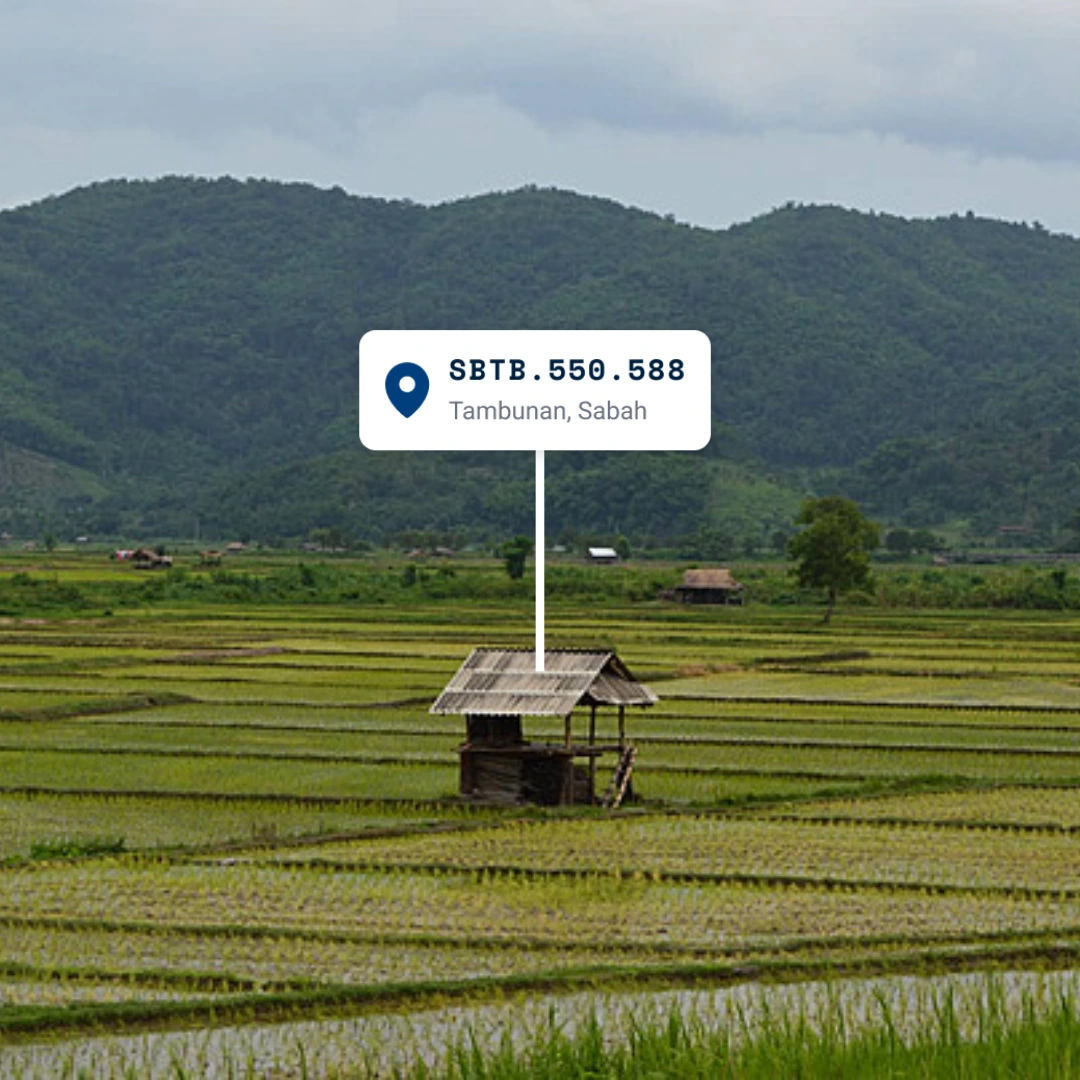
On a working farm, the important points are never just the big field. They are the pump house, the shed, the turning point after rain, and the gate that a contractor has to find before the weather closes in. If one of those is missed, the whole visit slips. The crew might still get the right general area, but the useful work starts only when somebody finds the exact building or track. On a wet day, that can be the difference between finishing the job and coming back tomorrow.
Why government teams feel the pain
Land offices, agriculture officers, and utility contractors often receive descriptions like: - the second plot after the oil palm nursery - the hill lot behind the old store - the patch near the river bend
Those directions are enough for locals, but weak for records, inspections, and repeat visits. The person on the ground ends up calling back for clarification while the workday keeps moving. A simple maintenance visit becomes a small expedition: stop, ask, turn back, ask again, then finally reach the right gate with less daylight left than planned. None of that is a failure of effort. It is a failure of the address system. It also means the same farm gets re-explained every time a new officer, contractor, or inspector shows up.
Using SBTN.0234.789, a farm structure or access point can be attached to one exact code. That makes site visits faster and documentation less dependent on memory. It also gives the same farm one repeatable reference for mapping, subsidy checks, drainage work, and field inspections over time. The code becomes a shortcut for everyone who has to return to the same place later. A file note can point to it. A work order can quote it. A field team can use it months later without rebuilding the route from scratch.
In practice, that means the farm is easier to manage, easier to inspect, and easier to keep on record. The work stays tied to one place instead of one long description that changes every time somebody repeats it. That is the difference between a farm that can be described and a farm that can actually be found. It also means the next person in the chain can understand the site without starting from a fresh phone call.
For rural land management, that repeatability matters. One code can sit in a file, on a map, on a work order, and in a contractor's phone. Months later, when the same road is muddy again or the same drain needs clearing, everyone is still talking about the same point on the ground.
Where to go next
If this article matches the location problem you are dealing with, continue to the pages that explain the product, the feature set, and the proof behind it.